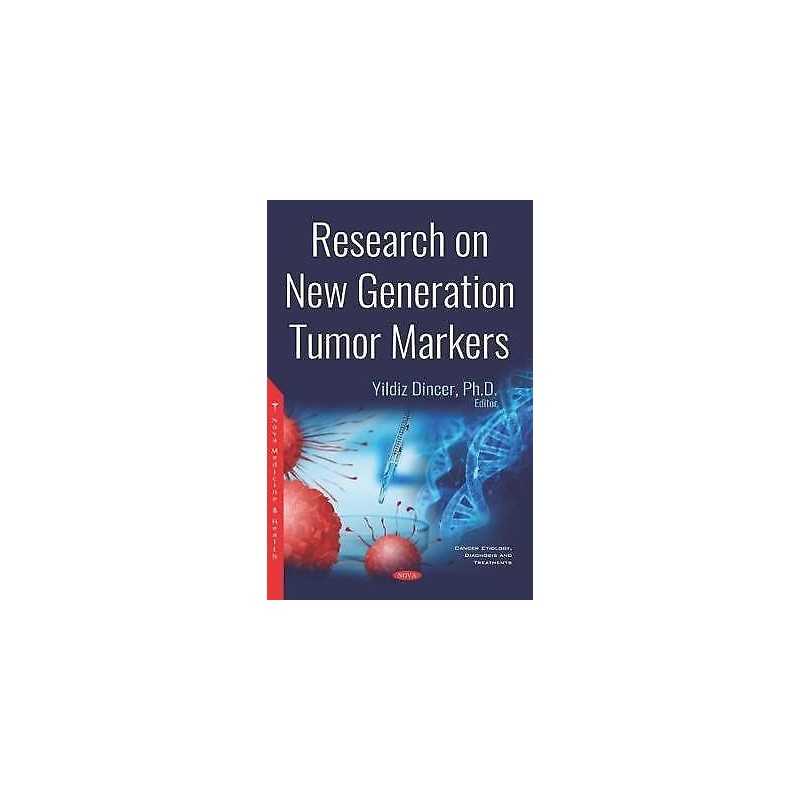
Research on New Generation Tumor Markers - 9781536143676
New: A new, unread, unused book in perfect condition with no missing or damaged pages. See the ... Read moreabout the conditionNew: A new, unread, unused book in perfect condition with no missing or damaged pages. See the seller's listing for full details. See all condition definitionsopens in a new window or tab
Many cancers are associated with the abnormal production of some molecules which can be measured in plasma/urine or can be detected on the surface of resected tumour tissue. These molecules are known as tumour markers. The potential uses of tumour markers are screening in the general population, differential diagnoses of symptomatic patients, clinical staging of cancer, estimating tumour volume, indicating prognosis, monitoring treatment and detecting recurrences. In order to obtain maximum clinical benefit, a tumour marker should have some characteristics. A tumour marker should be tissue-specific. The plasma level of the tumour marker should be in proportion to the size and activity of the tumour. A tumour marker should be present in plasma at a detectable level, even though tumour size is very small. A tumour marker should reflect the altered tumour characteristic as a response to therapy. Unfortunately, currently used tumour markers do not meet all of these criteria. A majority of them are present in normal, benign and tumour tissues, and unfortunately, they are not specific enough to be used for cancer screening in the general population. In addition, conventional tumour markers are poor in reflecting altered tumour behavior in response to anticancer therapy. They are of most value during follow-up appointments. Recent developments in molecular biology have led to the identification of numerous new tumour biomarkers. Firstly, the detection of DNA and RNA freely circulating in blood has provided a new perspective for the early diagnosis of cancer, patient follow-up, and assessment of therapy efficacy. Circulating free nucleic acids can originate from both malignant and non-malignant tissues. Discrimination of tumour cells is based on the presence of tumour-specific genetic and epigenetic alterations. This circulating nucleic acid-based approach is termed a liquid biopsy. Due to its non-invasive and repeatable features, liquid biopsy is a promising tool for cancer patients. It is particularly helpful in cancers where solid tissue biopsies are not feasible, and in the metastatic patients when multiple distinct tumour masses are simultaneously present. As another advantage, liquid biopsy shows the current tumour dynamics during anticancer therapy and drug sensitivities that conventional examinations fail to reflect. Secondly, self-renewable stem cells have the potential to cause cancer. If stem cells are genetically or epienetically changed, their differentiation potential becomes impaired and their proliferative capacity becomes uncontrolled. Current anticancer therapies mostly fail to eradicate cancer stem cells and instead favor expansion of the cancer stem cell pool and/or select for resistant stem cells. Thirdly, microRNAs, non-coding RNAs and transfer RNA fragments found in the bloodstream are candidate markers for the diagnosis and prognosis of different types of cancer. This book provides an overview of these new molecular tumour markers.
Good condition -A book that has been read, but is in good condition. Minimal damage to the book cover.The majority of pages are undamaged might be with some creasing or tearing, and pencil underlining of text. No writing in the margins, no missing pages.
Good condition -A book that has been read, but is in good condition. Minimal damage to the book cover.The majority of pages are undamaged might be with some creasing or tearing, and pencil underlining of text. No writing in the margins, no missing pages.
Good condition -A book that has been read, but is in good condition. Minimal damage to the book cover.The majority of pages are undamaged might be with some creasing or tearing, and pencil underlining of text. No writing in the margins, no missing pages.
Good condition -A book that has been read, but is in good condition. Minimal damage to the book cover.The majority of pages are undamaged might be with some creasing or tearing, and pencil underlining of text. No writing in the margins, no missing pages.
Very good condition -A book that has been read and does not look new, but is in excellent condition. Don't have obvious damage to the book cover. No missing or damaged pages, no creases or tears, no underlining or highlighting of text, and no writing in the margins.
Good condition -A book that has been read, but is in good condition. Minimal damage to the book cover.The majority of pages are undamaged might be with some creasing or tearing, and pencil underlining of text. No writing in the margins, no missing pages.
Good condition -A book that has been read, but is in good condition. Minimal damage to the book cover.The majority of pages are undamaged might be with some creasing or tearing, and pencil underlining of text. No writing in the margins, no missing pages.
Good condition -A book that has been read, but is in good condition. Minimal damage to the book cover.The majority of pages are undamaged might be with some creasing or tearing, and pencil underlining of text. No writing in the margins, no missing pages.
Good condition -A book that has been read, but is in good condition. Minimal damage to the book cover.The majority of pages are undamaged might be with some creasing or tearing, and pencil underlining of text. No writing in the margins, no missing pages.
Good condition -A book that has been read, but is in good condition. Minimal damage to the book cover.The majority of pages are undamaged might be with some creasing or tearing, and pencil underlining of text. No writing in the margins, no missing pages.
Good condition -A book that has been read, but is in good condition. Minimal damage to the book cover.The majority of pages are undamaged might be with some creasing or tearing, and pencil underlining of text. No writing in the margins, no missing pages.
Good condition -A book that has been read, but is in good condition. Minimal damage to the book cover.The majority of pages are undamaged might be with some creasing or tearing, and pencil underlining of text. No writing in the margins, no missing pages.
Good condition -A book that has been read, but is in good condition. Minimal damage to the book cover.The majority of pages are undamaged might be with some creasing or tearing, and pencil underlining of text. No writing in the margins, no missing pages.
Very good condition -A book that has been read and does not look new, but is in excellent condition. Don't have obvious damage to the book cover. No missing or damaged pages, no creases or tears, no underlining or highlighting of text, and no writing in the margins.
Good condition -A book that has been read, but is in good condition. Minimal damage to the book cover.The majority of pages are undamaged might be with some creasing or tearing, and pencil underlining of text. No writing in the margins, no missing pages.
Good condition -A book that has been read, but is in good condition. Minimal damage to the book cover.The majority of pages are undamaged might be with some creasing or tearing, and pencil underlining of text. No writing in the margins, no missing pages.
€17.97
New: A new, unread, unused book in perfect condition with no missing or damaged pages. See the ... Read moreabout the conditionNew: A new, unread, unused book in perfect condition with no missing or damaged pages. See the seller's listing for full details. See all condition definitionsopens in a new window or tab